
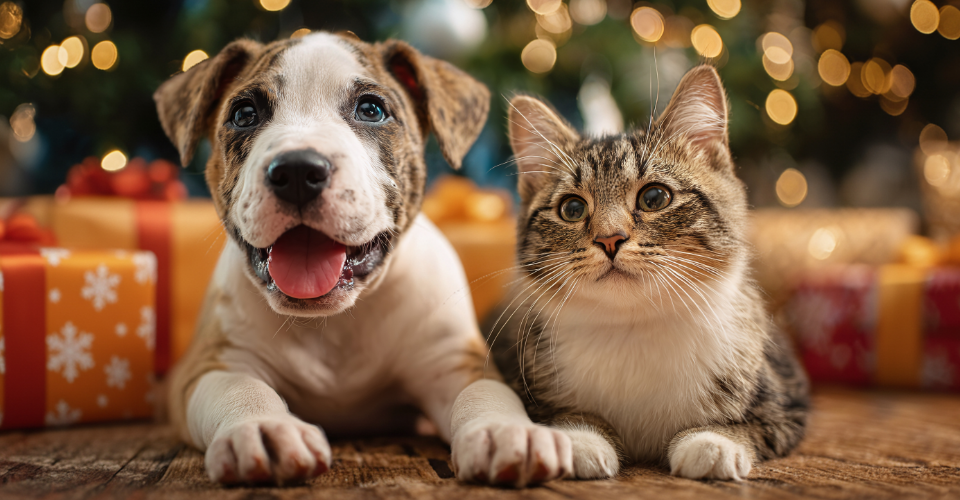

The holidays are basically South Africa’s annual Olympics: traffic jams, sunburn, braais, emotional support potato salads, and at least one cousin who arrives unannounced with a new plus-one and an empty Tupperware. But while December is a jol for humans, it can be a lot for our pets.
Between fireworks, heatwaves, uninvited toddlers, and all the festive food they think they deserve (but absolutely shouldn’t have), December can be rough on the furry fam. Which is why insurance for your pet becomes even more important. As we enter the busiest, brightest time of year, it becomes more important than ever to understand how to care for your pet in a way that keeps them safe, healthy, and stress-free.
Caring for your pet during the holidays is about preventing expensive emergencies, stress meltdowns, and “Babe, where’s the dog?!” moments. In this blog, we talk routine, fireworks, travel and more. So, let’s get you holiday ready.
Why Holiday Pet Care Matters More Than You Think
December is chaotic for humans, but for pets, it’s a full-blown plot twist. Your dog is suddenly surrounded by strange people who smell like rotisserie chicken. Your cat is offended by the Christmas tree. Your parrot is repeating things your uncle shouldn’t have said in front of the kids. They don’t understand why the neighbours suddenly sound like they’re reenacting a cowboy shootout. And routine? Gone.
Holiday pet care matters because:
- Routine changes = stress
- Loud celebrations = panic
- New foods = stomach disasters
- Heat waves = danger
Keeping Your Pets Safe This Christmas (Without Killing the Festive Vibe)
Keeping decorations, lights, and cords out of reach
If your dog is a chewer, Christmas is basically a buffet of danger.
Tinsel? Looks like a toy.
Baubles? Perfect for fetch — until someone swallows one.
Electric cords? A literal shocker.
Your Christmas tree may look gorgeous, but to your pet it looks like:
- A snack
- A climbing challenge
- A personal jungle gym
- A tangle toy waiting to happen.
A few small tweaks can keep your home festive and your pets safe, because nobody wants to spend Christmas Eve at the emergency vet.
Secure the Christmas tree
Anchor it to a wall or use a solid base so it doesn’t topple over mid-pounce.
Choose pet-friendly décor
Go for shatterproof ornaments and skip anything small enough to be swallowed.
Keep the tempting stuff up high
Anything sparkly, dangly, crunchy, or vaguely chewable.
Hide the wires and cords
Cover cords, tape them down, or tuck them away.
Be plant-smart
Holiday favourites like poinsettias, mistletoe, holly and lilies can make pets sick. Choose safer, pet-friendly alternatives.
Rethink the candle moment
Use flameless LED candles or place real candles where curious noses and swishy tails can’t reach them.
Creating a calm space when guests visit
December gatherings can turn your house into a rugby stadium. Loud, sweaty, and full of shouting. Create a quiet space for your pet with:
- Fresh water
- A comfy blanket
- Treats
- A familiar toy.
Even the friendliest pet needs a safe zone away from chatty aunties and kids who think its tail is a steering wheel.
What Can Dogs Eat Over Christmas and What Should They Avoid?
Christmas food is winning the lotto, on your first try. Christmas food is the love of your life, saying, “I do”. Christmas food is all things wonderful… but it’s not for dogs, well, not all of it. To be on the safe side of the table, you should always consult your vet before putting any Christmas food on your pet’s plate.
Safe-ish Christmas snacks:
- Plain cooked chicken (no bones!)
- Veggies such as carrots or peas
- A tiny lick of mashed potato (unsalted).
A big NOPE list:
- Chocolate (immediate vet trip)
- Bones (splinter danger)
- Raisins & grapes (toxic)
- Anything marinated, salted, or spiced
- Macadamias (poisonous)
- Onion, garlic, chives
- Chocolate (even “just a piece”)
- Gammon with glaze
- Alcohol
- Christmas pudding.
RELATED: PAWS OFF THE BEER!
What To Do If Your Pet Overeats or Eats Something Toxic
Please don’t try home remedies, milk, salt water, or forcing vomiting. Some toxins cause more damage coming back up than going down. Stop your pet from snacking on whatever they’ve found and move them away from the scene before they try round two. Then wait for proper guidance from a vet.
Call your vet immediately
Not your WhatsApp group, not your uncle who thinks he’s a doctor because he once watched House. If you’re covered by dotsure.co.za, you can go to any vet. Literally. Any vet. (More on that later.)
Step 1: Don’t panic.
Step 2: Don’t Google. Dr Google lies.
Step 3: Call your vet ASAP.
Step 4: Have your pet insurance details ready; it speeds up emergency care.
Common signs of poisoning to look out for:
- Vomiting or diarrhoea
- Excessive drooling
- Lethargy or weakness
- Wobbling or acting “drunk”
- Shaking or seizures
- Pale gums
- Sudden collapse.
If something feels off, trust your gut. Rather be the “over-worried pet parent” than the one who waited too long.
RELATED: HOUSEPLANTS THAT ARE TOXIC TO DOGS AND CATS
How to Protect Pets from Fireworks and Loud Celebrations
South Africans and fireworks go together like pap and wors. But pets? Not so much.
Pets fear fireworks because they hear them at between 4 and 7× the loudness you do. This can easily cause panic or trigger their flight instinct.
Comforting techniques that help
- Bringing them indoors
- Closing curtains
- Playing calming music
- Staying close (nothing beats a warm lap and a safe human)
When to speak to your vet about anxiety medication
If your dog turns into a trembling jellybean every New Year’s Eve, speak to your vet beforehand. Don’t wait until 31 December when every vet in SA is busier than a petrol attendant on the N3. Again, being covered by us means you can speak to any vet. At the coast. In the Free State. In Sandton. Even that fancy one in Cape Town that serves pets artisanal water.
Managing Pet Anxiety With Vet Guidance and Targeted Nutrition
If your pet is naturally anxious or highly sensitive, speak to your vet. They can advise on medical interventions or prescription diets tailored to your pet’s specific stress triggers.
There are various natural treatments and over-the-counter products available to help reduce stress and encourage calm. Like Hill’s Prescription Diet c/d Multicare Stress for cats and Hill’s Prescription Diet i/d Stress for dogs, which are formulated with ingredients that help reduce anxiety-related symptoms while supporting urinary and digestive health —two areas that often flare up when pets feel overwhelmed. They can help you support emotional balance from the inside out.
How to Keep Your Pet Cool and Comfortable in the Heat
Summer in South Africa isn’t shy. Some days feel like you’re walking through a hairdryer on full blast and our pets feel it even more intensely. They’re basically wearing a full tracksuit made of fluff.
One of the most common seasonal questions is: What temperature is too hot to walk a dog? A safe guideline: avoid walks during the hottest parts of the day, especially when temperatures rise above 26°C. Dogs regulate heat through panting, making them far more vulnerable to overheating during peak heat. A simple test is to hold your hand on the pavement for five seconds. If it’s too hot for you, it’s too hot for them.
Signs of heatstroke — and what to do FAST
- Excessive panting
- Bright red gums
- Vomiting
- Collapse
- Drooling
- Disorientation.
Heatstroke in pets is serious. Move them to shade, offer cool water, and get them to a vet urgently.
Cooling tricks to prevent heat exhaustion
Try:
- Frozen treats
- Wet towels
- Fans
- Cool mats
- Shaded chill spots
- Avoiding “high-octane ball throwing” at midday as if you’re training them for the PSL.
What Should You Know About Pet Travel Safety?
Holiday travel, whether a road trip down the coast or a quick city escape, can be a wonderful experience for pets, provided it’s done safely.
RELATED: A GUIDE FOR TRAVELLING WITH YOUR PET
How to prepare your pet for a road trip
Preparation is everything:
- Let them sit in the car for short sessions before the trip.
- Pack familiar bedding or a favourite toy.
- Ensure they’re up to date with vaccinations.
- Feed them hours before the drive to reduce nausea.
- Plan for rest stops every 2–3 hours.
A calm, structured introduction makes travelling far less stressful.
Safe travel carriers and restraint options
Pets must always be safely restrained. Free-roaming pets in a moving vehicle are dangerous, both for them and for you.
Consider:
- Crash-tested harnesses
- Secured carriers
- Boot guards
- Seat-belt clip-ins.
Stability and comfort help your pet feel secure, especially on winding roads or during long-haul drives.
Managing food, rest stops, and anxiety on the go
Stop often, offer water regularly, and keep feeding light. If your pet struggles with anxiety, speak to your vet about calming supplements or strategies that work for travel.
Can You Visit Any Vet When Covered by dotsure?
Yes.
Yebo.
Hoekom nie?
When your fur kid needs help, the last thing you should worry about is whether your vet is “in network.” With dotsure.co.za, you can visit any registered vet in South Africa.
That means zero stress when:
- You’re on holiday
- Your pet eats something suspicious
- You have a fireworks-related panic
- It’s too hot and they need attention, or
- Any other emergency.
With us, you choose the vet, we cover the care. That’s what wholehearted pet insurance is all about.
How Pet Insurance Can Save You and Your Pet This Holiday Season
December emergencies hit harder than debit orders. One chocolate incident, one heatstroke scare, one “my dog swallowed a Christmas angel,” and you’re suddenly tapping into backup savings you didn’t plan to use.
Emergencies happen fast. Vet bills add up faster. That’s why we pride ourselves on superfast claims.
Pet insurance helps with:
- Accident cover
- Illness cover
- Emergency care
- Medication
- Follow-ups
And with dotsure.co.za, you can claim online, easily, even while braaiing. So, if you want a speedy claims payout, contact us today!
