
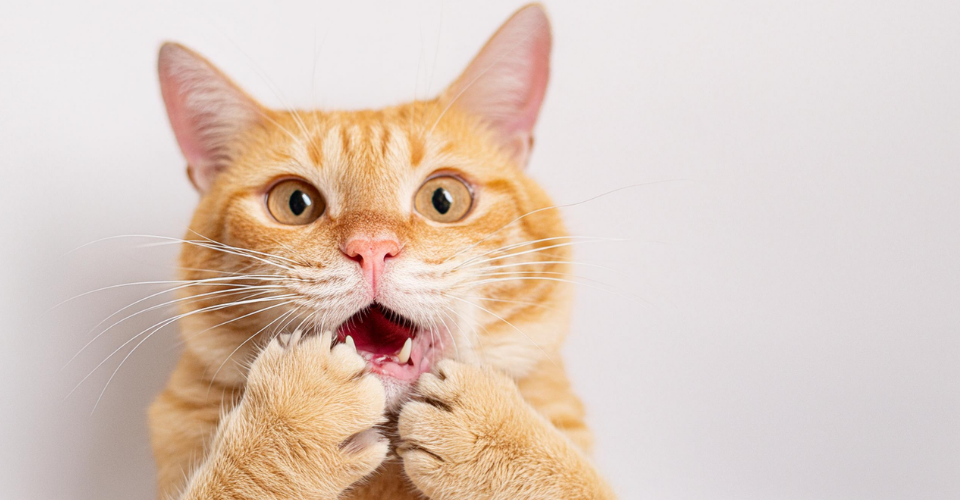

A guide to navigating holiday stress in cats by Vet of the Month: Dr Gerna Smit.
The holidays are here, and while you’re singing Christmas carols and boasting a fridge full of leftovers, your cat is quietly hitting hazard lights behind the couch. But… what stresses your cat out so much during the holidays? To help us navigate this seasonal pile-up of stress, we contacted a professional; our Vet of the Month, Dr Gerna Smit from Hoogland Dierekliniek in Centurion. Thirty years in the game. Medicine specialist. And cat whisperer of note.
So, think of this as a “road map” crafted with the wisdom, experience, and the compassion of Dr Smit, who has spent her career helping cats survive the toughest of emotional terrains (including the holiday season). Come with us on this journey to understanding your cat’s stress, spotting the signs, offering meaningful comfort and why cat insurance could be the difference between making it through the festive season and things taking a turn for the worst.
RELATED: WHAT IS FIV IN CATS
What Causes Stress in Cats During the Holidays?
The festive season arrives with enough sensory input to frazzle any living creature. Humans cope with it by eating gammon at 9AM and ignoring their emails from the 15th of December. Cats, however? They experience December like a live-action horror film.
According to Dr Smit holidays come with:
Screamy kids, noisy cousins, and routine chaos
Your cat is a creature of habit. Breakfast at 6am. Nap at 7:07am. Judge-you-from-the-couch at 9:10am.
But in December? It’s a circus. Suddelny mom is still asleep at 7am, so no brekkie for tabby. Kids running around, relatives opening and closing doors like they’re training for the Olympics, and someone’s toddler aggressively “showing kitty their new truck.” To a cat, this is emotionally taxing and very stressful.
Visitors, travel, and festive clutter
Every new person has a new smell: perfume, sunscreen, boerie rolls, or koeksisters from Spar. Your cat is suddenly surrounded by unfamiliar scents and unfamiliar voices.
And don’t get them started on decorations:
- The tree: a stranger in their home.
- The tinsel: is that a snake?
- The baubles: target practice.
- The wrapping paper: enemy number 1.
Some cats are more sensitive than others. Just like people, cats have personalities:
- The extrovert cat will mingle but hopes everyone leaves early.
- The introvert cat will vanish into a corner you didn’t know was in your house.
More on Our Vet of the Month: Dr Gerna Smit
Special interest: Medicine
Fun facts:
- Loves to cook
- Has a Great Dane named Mira (with trust issues)
- Has a Yorkie named Snippie (that’s a bit neurotic)
- Has a Maine Coon named Kiwhi (acts like the queen that she is)
Why Do Cats Hide When They’re Stressed?
According to Dr Smit:
“Hiding is a survival instinct. Stressed cats often retreat to dark, quiet places, sometimes for days.” Hiding is emotional self-protection. It is a coping mechanism.
In the wild, stress means danger. Danger means “hide or get eaten.” Your cat doesn’t know that the only predator in your house is the wooden spoon you use to chase the kids from the kitchen. To them, the festive cheer is more like festive chaos. So, when things get loud or overwhelming, your cat activates stealth mode. Under beds. Inside cupboards. Behind the fridge.
What you can do when your cat goes missing
Think of this like a Search & Rescue mission:
- Check all quiet corners
- Listen for tiny shuffling sounds
- Shake the treat jar
- Give them the vet-recommended c/d Multicare Stress Cat Food from Hills!
But the real solution? Prevent them from needing to hide in the first place. We’ll get to that.
What Are the Signs of Stress in a Cat?
If cats had dashboards, these would be the flashing warning lights:
- 🚨 Sudden hiding
- 🚨 Aggression or irritation
- 🚨 Overgrooming (patchy bald spots)
- 🚨 Scratching furniture
- 🚨 Urine marking
- 🚨 Sniffles, sneezing, watery eyes
- 🚨 Straining in the litter box or peeing blood
- 🚨 Loss of appetite
- 🚨 Vomiting or diarrhoea.
Yes, stress can trigger physical illness. Cats don’t stress-eat like humans. They don’t bake banana bread or shop online at 2 AM. They exhibit stress through behavioural and bodily symptoms.
How Can I Reduce My Cat’s Stress Naturally?
You don’t need essential oils. You don’t need to whisper affirmations. You just need a plan. Here are Dr Smit’s top recommendations:
- Create a safe room stocked with food, water, and litter
- Add hiding spaces (open cupboards, boxes, tunnels)
- Give them vertical spaces to retreat to
- Keep lighting soft
- Use catnip or calming pheromone diffusers
- Maintain the feeding schedules
- Stick to familiar routines.
Can Toys & Playtime Help Reduce Stress in Cats?
Absolutely.
Interactive play isn’t just fun for cats, it’s therapy.
How interactive play builds confidence
Chasing a feather toy mimics hunting. Hunting builds confidence. Confidence reduces stress.
Best enrichment ideas for indoor cats
A stimulated cat is a calm cat. Try these enrichment ideas:
- Slow feeders or puzzle bowls
- Cardboard box “tunnels”
- Window perches for bird-watching
- Ice cubes with treats frozen inside
- Laser pointer workouts (don’t forget to let them “catch” something at the end!)
- Place boxes around the house.
What Should You Avoid When Your Cat Is Stressed?
Avoid:
- Forcing interactions
- Introducing new pets
- Playing loud music
- Moving furniture unnecessarily
- Punishing stress behaviour
- Spraying loud aerosols near them
- Trapping them in high-traffic areas
How Can a Vet Help a Stressed Cat?
Vets can prescribe:
- Calming collars
- Pheromone sprays
- Nutraceutical calming supplements
- Anti-anxiety meds
- Dietary support (including foods designed for stress management)
- Behaviour modification plans
Dr Smit recommends seeking vet attention when:
- Your cat stops eating
- Urine contains blood
- They strain repeatedly in the litter box
- They sneeze excessively
- They develop a fever
- Diarrhoea/vomiting persists
- Behaviour becomes aggressive or unmanageable
How to Prevent Cat Stress Before It Starts
Holiday prep isn’t just for your fridge and your budget; it’s also for your cat.
Prepare early
Start creating safe spaces weeks before the chaos begins.
Stick to routines
Mealtimes. Play. Litter cleaning. Consistency equals safety.
Have a firework plan
Close curtains, play soft music, and secure all exits.
Check in daily
One-on-one time with your cat is non-negotiable. Even if it’s 5 minutes between flipping chops on the braai.
How Cat Insurance Helps During Stress Season
Vet visits spike during the holidays and not just because of chocolate poisoning.
Stress-related issues such as cystitis, vomiting, upper respiratory infections, and injuries from frantic hiding can lead to unexpected vet bills. Having cat insurance helps you stay calm while your cat finds theirs.
It means:
- Vet bills are covered
- Medication supported
- Emergency visits are less scary
- Peace of mind for you and your cat.
And honestly? Nothing reduces your stress like knowing your kitty is covered by dotsure.co.za. Give your cat the calm, predictable December they deserve. Contact us today and get your cat covered online before they finish their next nap.
And before we wrap up, Dr Smit has one last nugget of advice for you:
“Keep a close eye on them and connect at least once a day. If they like brushing or cuddles, make time for it, even during the busy season.”
RELATED: FELINE KIDNEY HEALTH
